Chart type
Background Map

Definition
A background map is a type of visualization that uses a geographical map as the backdrop to display data points or regions. The data is overlaid on the map, allowing for a spatial understanding of the information. Background maps are often used to visualize data that is tied to a specific location, such as population density, crime rates, or weather patterns.
Show codeHide code
library(maps)
# the map library contains many maps. Here is the world map
map('world', col="grey", fill=TRUE, bg="white", lwd=0.05, mar=rep(0,4), border=0, ylim=c(-80,80) )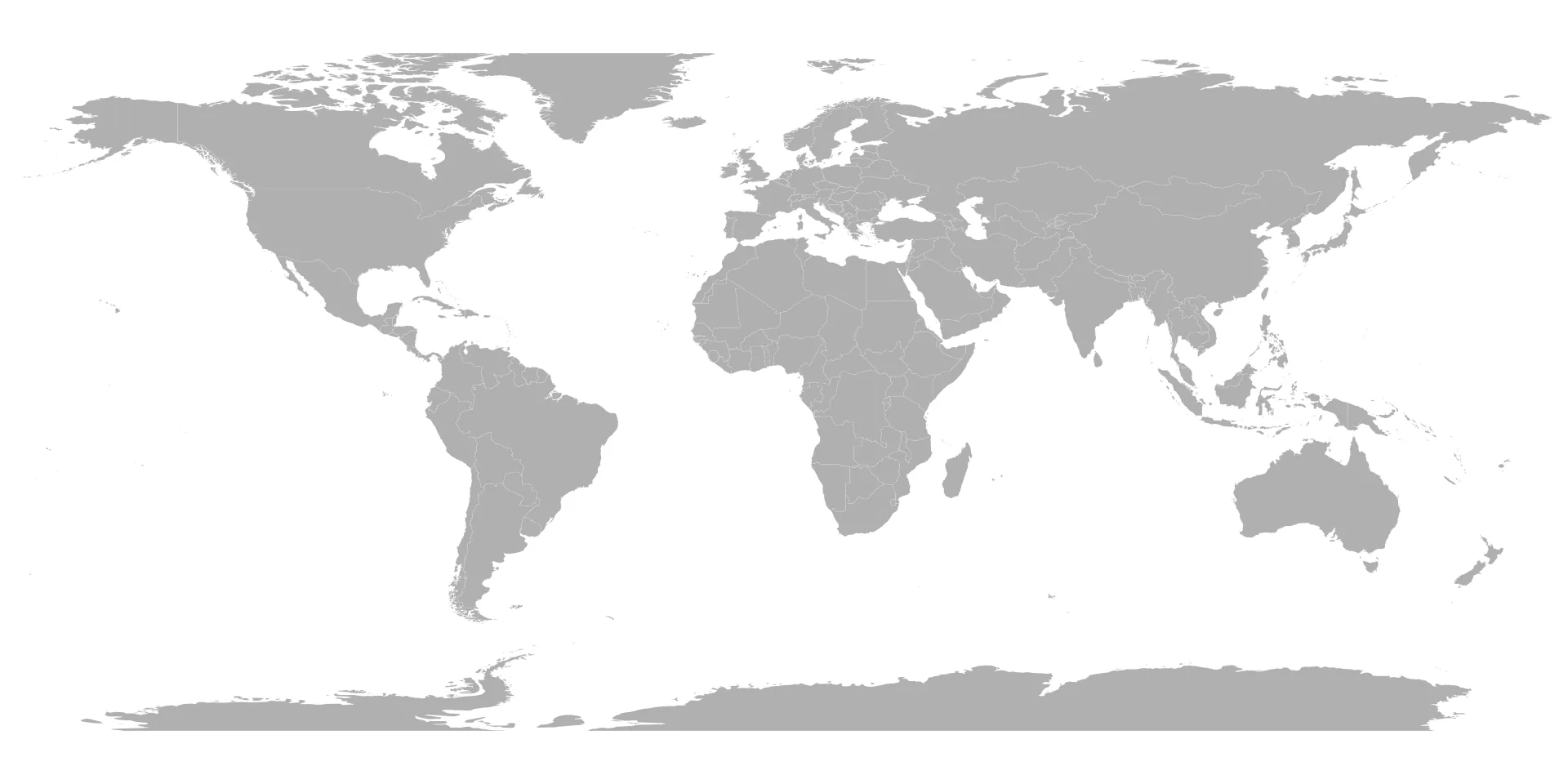
R offers multiple avenues for generating background maps. One such method is by utilizing the maps package, which enables the creation of maps for the world, continents, or individual countries. However, it’s worth noting that this package might not be the most suitable choice for more intricate or specific mapping objectives.
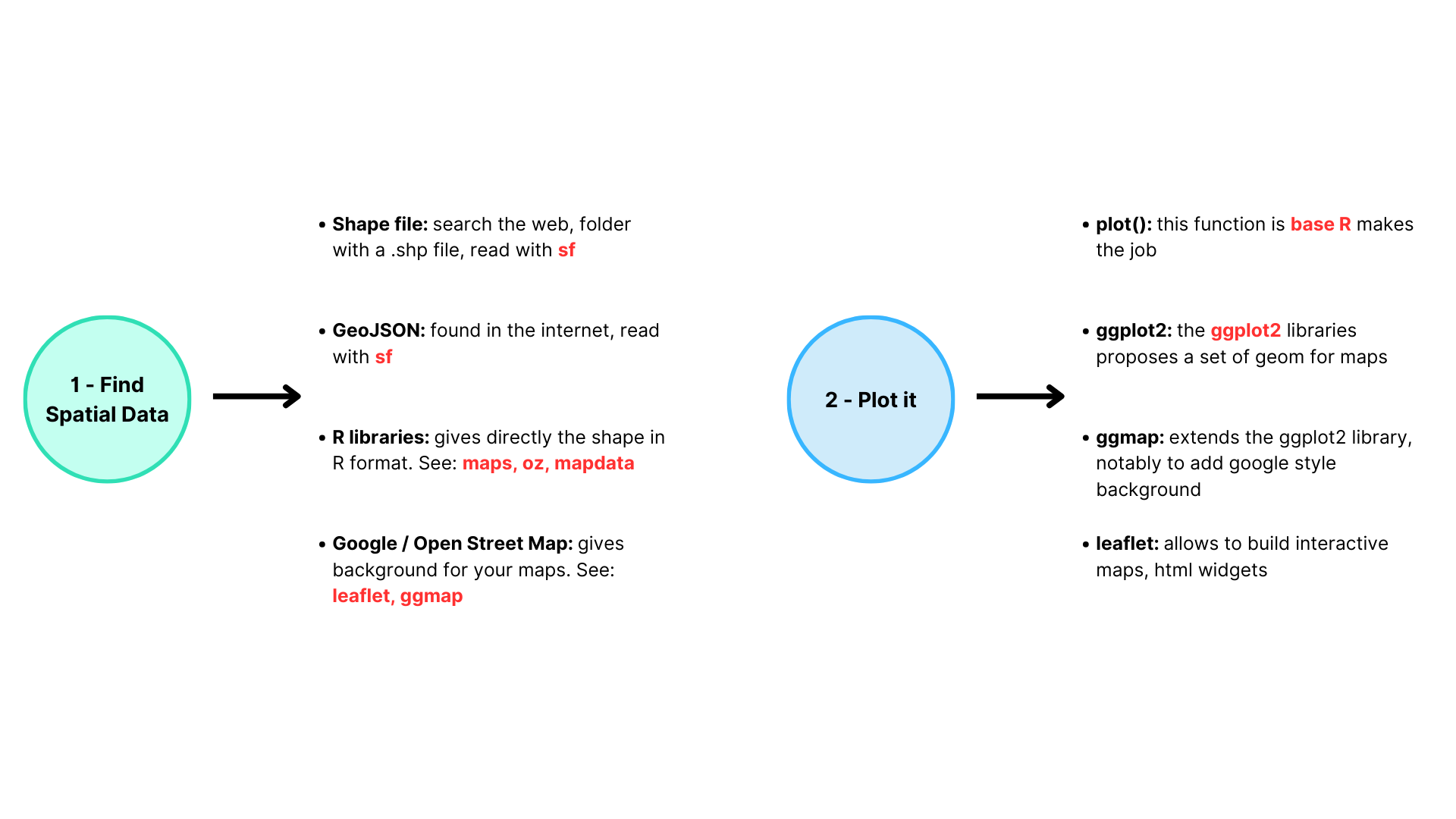
Below you can find an example of the process of working with maps in R.
What for
Background maps are usually just the starting point for a visualization. They provide the foundation for displaying data in a spatial context.
Then, one will generally transform it into one of the following types of visualizations:
- Choropleth maps: where regions are colored according to a variable.
- Bubble map: where bubbles are placed on the map to represent data points at specific locations.
- Hexbin map: where hexagons are used to represent data density.
- Connection map: where lines are used to show connections between locations.
Build your own
The R, Python, React and D3 graph galleries are 4 websites providing hundreds of chart example, always providing the reproducible code. Click the button below to see how to build the chart you need with your favorite programing language.